

Last Updated: January 2026
—
Introduction
Many people find Slack’s paid plans expensive and worry about the costs.
This is because Slack holds the second-largest share in Japan’s business chat tool market after Microsoft Teams, meaning many companies have adopted it.
In this article, we thoroughly compare the paid plans of the five major chat tools with high market share and explain specifically what factors make Slack costly.
Actually, even if you keep Slack on its free plan, you may be able to reduce costs by using it alongside a virtual office.
By reading this article, you’ll discover how to keep Slack costs down while further improving the quantity and quality of communication within your team.
—
5 Reasons Why Slack Is Expensive: Explained with a 5-Tool Comparison Table
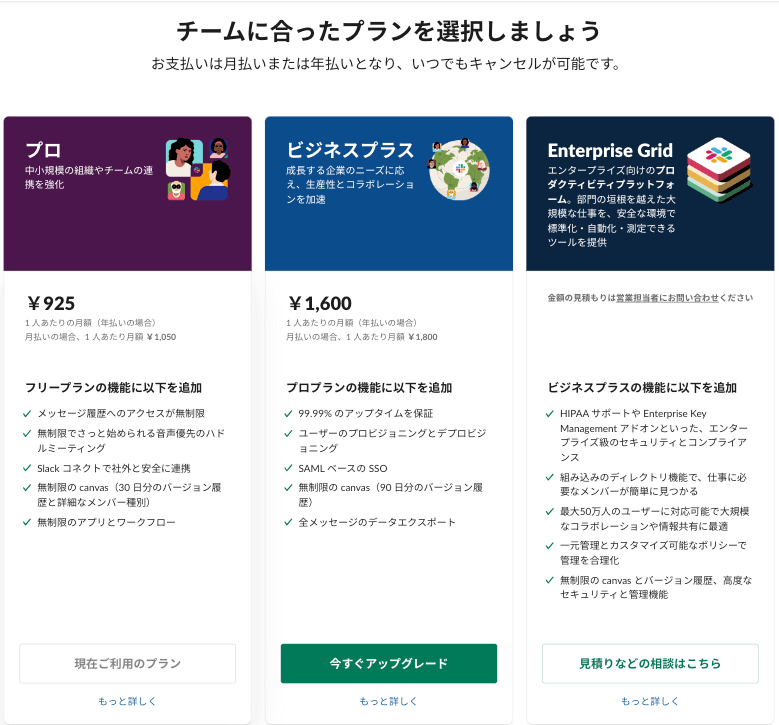
*Source: https://app.slack.com/plans/*
We compared the cheapest paid plans of Japan’s five major chat tools:
| Tool | Monthly/User (Annual) | Trial | Storage | Video Call | SLA |
|---|---|---|---|---|---|
| Slack | ¥925 | On request | 10GB | 15 people | ✕ |
| Microsoft Teams | ¥599 | ✕ | 10GB | 300 people | ✕ |
| LINE WORKS | ¥450 | Partners only | 1TB (shared) | 200 people | ○ |
| Google Chat | ¥680 | 14 days (10 users) | 30GB | 100 people | ○ |
| Chatwork | ¥700 | 1 month | 10GB | 14 people | ✕ |
Comparing with other chat tools reveals five reasons why Slack’s paid plan is expensive:
1. Highest monthly fee among chat tools
2. Limited storage
3. Fewer video call participants
4. No Service Level Agreement (SLA)
5. High learning curve
Let’s explain each reason in detail.
Highest Monthly Fee Among Chat Tools
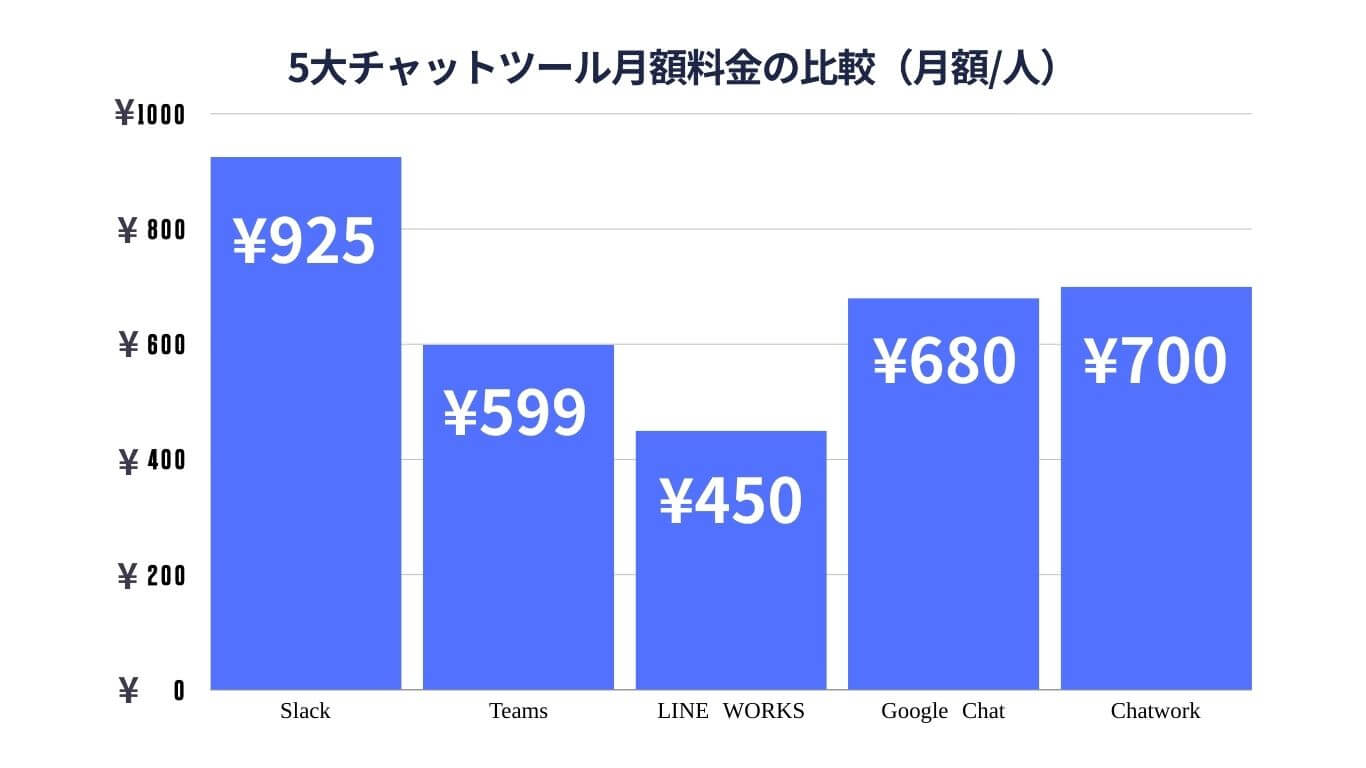
*Annual contract monthly rates
Comparing the per-user monthly fee across the five major chat tools, Slack’s rate (¥925) is the highest.
The average price of the cheapest paid plans across all five tools is ¥670, showing that Slack and Google Chat have higher prices.
Surprisingly, Slack’s fee is nearly double that of Teams (¥450), making it quite expensive.
For reference:
So Slack’s high price stands out.
Of course, if Slack delivers performance worth the price, there’s no problem. Let’s look at features beyond pricing.
Limited Storage
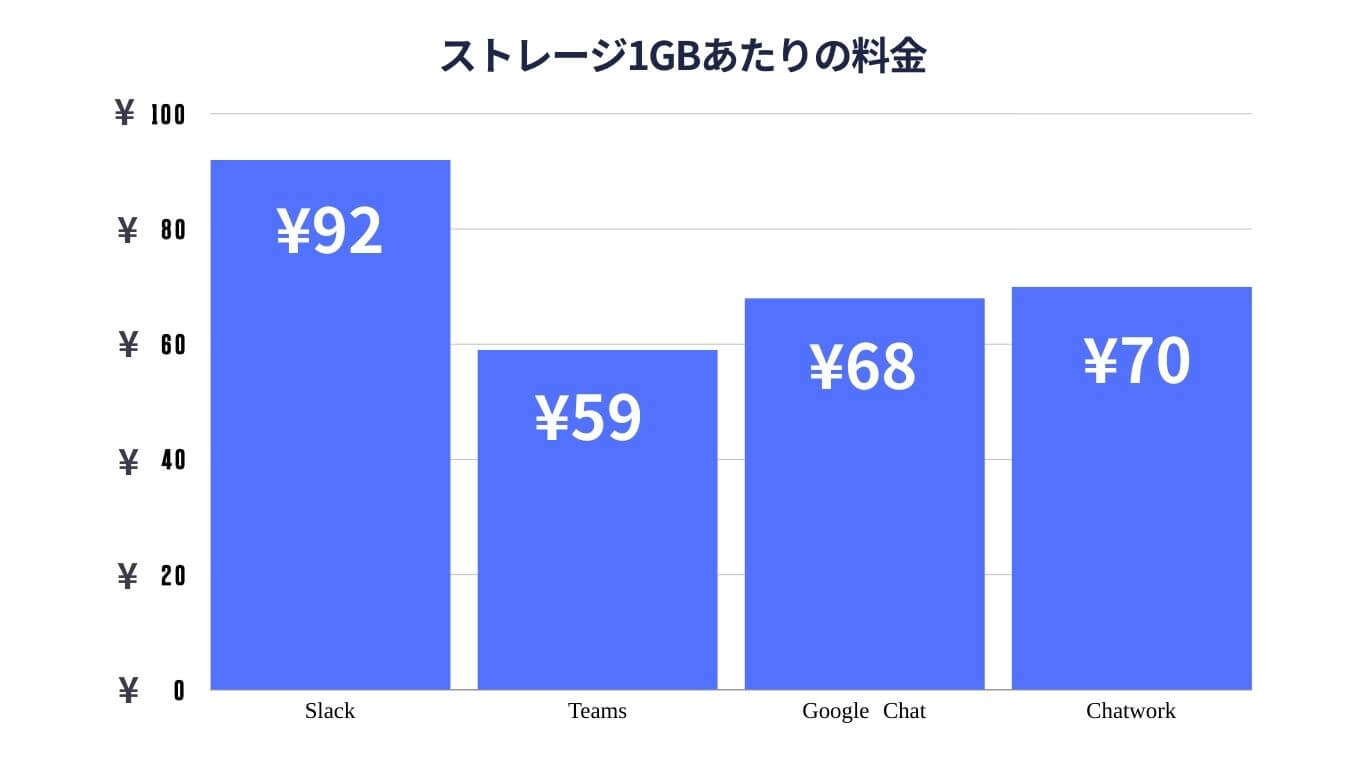
*LINE WORKS excluded as it offers shared storage (1TB) rather than per-user storage
Slack’s storage is tied with Teams and Chatwork at 10GB, the lowest among the tools.
Google Chat offers 30GB, three times more than the other three chat tools.
Of course, if the same storage came at the same price, that would be fine. But as mentioned, Slack’s paid plan has the highest price point.
| Storage Cost Per 1GB | Cheapest Plan | Next Tier Plan |
|---|---|---|
| Slack | ¥92 | ¥160 |
| Teams | ¥59 | ¥89 |
| Google Chat | ¥68 | ¥136 |
| Chatwork | ¥70 | ¥120 |
Converting to cost per 1GB of storage shows Slack’s poor cost-performance ratio.
Comparing the next tier plans, you notice Teams and Google Chat offer better value rather than Slack being expensive.
Fewer Simultaneous Call Participants
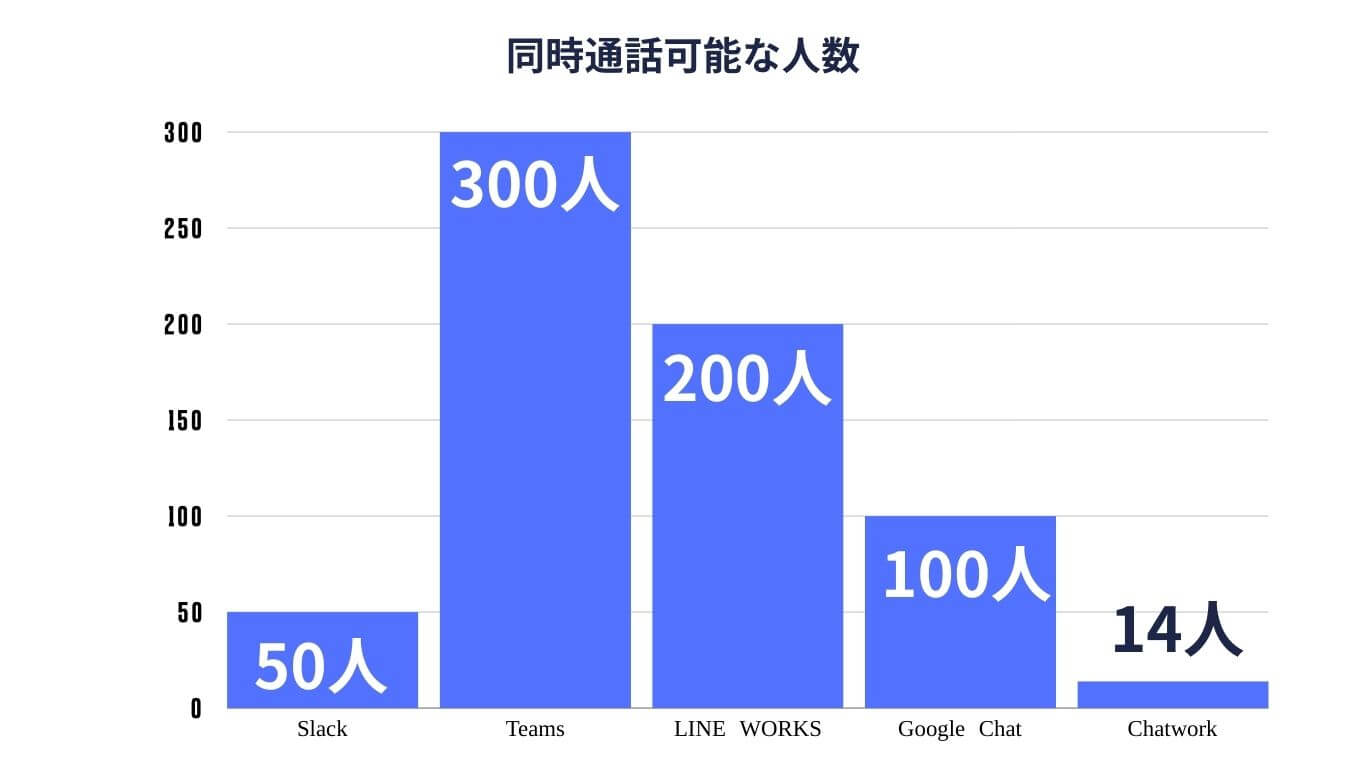
One weakness of chat tools like Slack and Chatwork is the limited number of people who can participate in video calls simultaneously.
Of course, they’re “chat” tools, so we shouldn’t compare them directly with Teams.
However, what you need to consider with Slack is that despite the “high monthly fee,” video call capacity is also limited.
Comparing with Chatwork, which is also classified as a chat tool: Chatwork offers 14-person video calls for ¥500, while Slack offers 50-person calls for ¥925.
No Service Level Agreement (SLA)
| Tool | Monthly/User (Annual) | SLA |
|---|---|---|
| Slack | ¥925 | ✕ |
| Microsoft Teams | ¥599 | ✕ |
| LINE WORKS | ¥450 | ○ |
| Google Chat | ¥680 | ○ |
| Chatwork | ¥700 | ✕ |
The cheapest paid plans of Slack, Teams, and Chatwork don’t include a Service Level Agreement (SLA).
Simply explained, SLA means “the app will work properly at least 99.9% of the time without bugs or issues.”
For example, if there are many unannounced maintenance periods, the SLA would not be met.
This means Slack, Teams, and Chatwork’s cheapest paid plans have no guarantee of when they might become unavailable.
Of course, having no SLA doesn’t mean they’re completely unusable. It just means there’s uncertainty during emergencies.
Note that Slack, Teams, and Chatwork all include SLA in their next tier plans.
High Learning Curve
Slack’s chat system differs somewhat from everyday chat apps like LINE, so first-time users need time to get accustomed to it.
To use Slack effectively, you need to understand:
Unlike LINE or Chatwork, it’s initially difficult to see who sent messages and how many unread messages you have.
Of course, you’ll get used to it with continued use, and once familiar, you can maximize its benefits.
The key point is the “high initial learning cost.”
The five reasons Slack is costly, based on comparing the five major chat tools:
1. Highest monthly fee among chat tools
2. Limited storage
3. Fewer simultaneous call participants
4. No Service Level Agreement
5. High learning curve
Especially for teams not using all of Slack’s features, the cost-performance drops even further. For such teams, keeping Slack on the free plan and combining it with other cheaper tools is an option.
—
If Slack Feels Expensive, Switch to Free Plan + Virtual Office
If you’re troubled by Slack’s high cost, we recommend switching to the free plan and adopting a “Slack free plan + virtual office” setup.
Why? Because it can cost less than Slack’s paid plan.
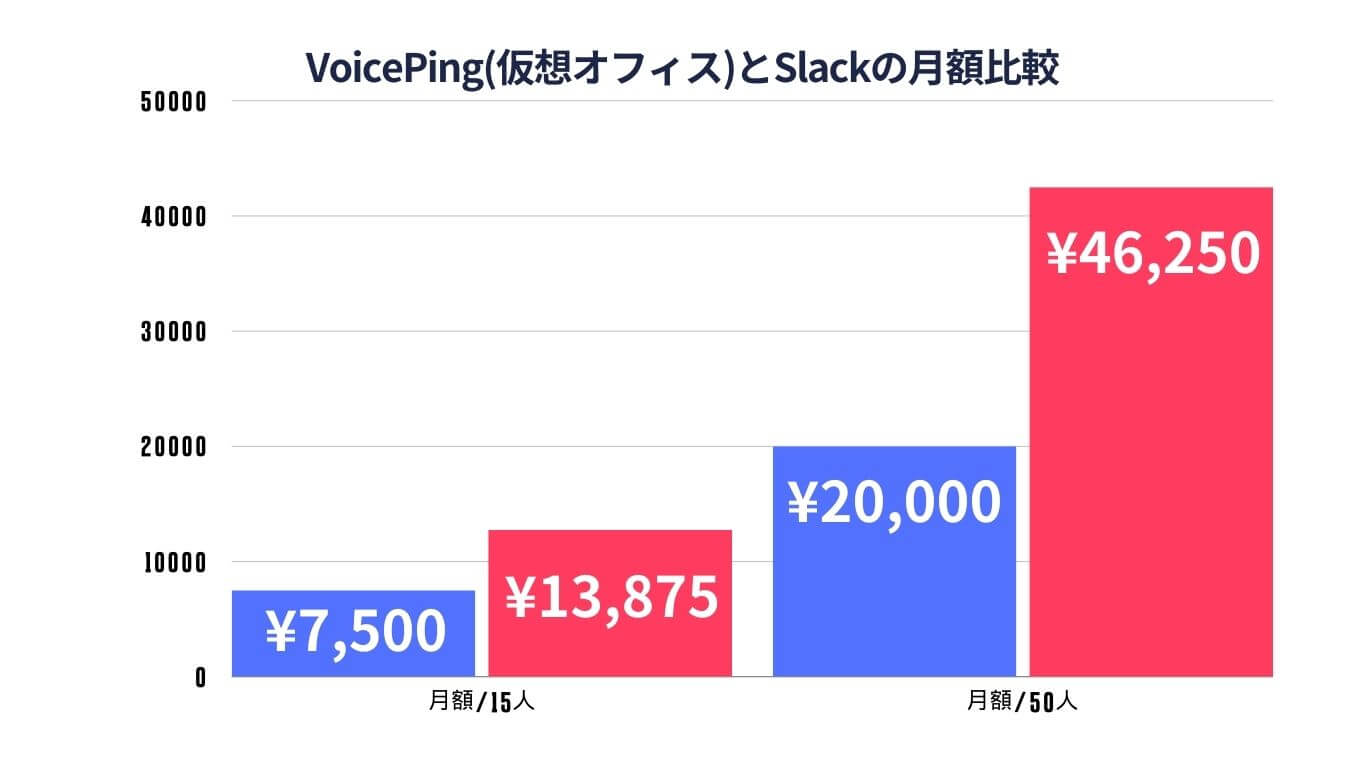
For 15 people: VoicePing virtual office costs ¥90,000/year vs Slack at ¥166,500/year — a difference of ¥76,500.
For 50 people: VoicePing costs ¥240,000/year vs Slack at ¥555,000/year — a difference of ¥315,000.
While virtual offices are clearly cheaper, “combining” a chat tool like Slack with a virtual office maximizes cost-performance.
In other words, rather than continuing with Slack’s paid plan, building a “cheap virtual office + free Slack setup” increases productivity while reducing costs.
—
Benefits of Virtual Offices That Slack Can’t Provide
Virtual offices have four benefits that Slack can’t provide:
1. Eliminate anxiety about when replies will come
2. Eliminate frustration when nuances don’t come across
3. Feel like “working together” even while remote
4. See team members’ work status
Let’s explain each benefit in detail.
Eliminate Anxiety About When Replies Will Come
With a virtual office, you can see others’ status and speak directly to confirm things without waiting for replies.
The advantage of chat tools like Slack is the ease of sending messages, but when the recipient views the message is up to them.
Therefore, anxiety about not receiving replies after sending messages is inevitable.
In contrast, most virtual offices let individuals set their status:
When you send a message but don’t get a reply, you can check their status to know “they must be busy and haven’t seen it,” or if you need confirmation quickly, you can speak directly to resolve it.
Also, even if you accidentally mark a message as read and cause confusion, you can casually ask “Did you see my message?” without slowing down work.
Eliminate Frustration When Nuances Don’t Come Across
For times when “text alone won’t convey this, but it’s not worth scheduling a web meeting,” virtual offices solve this instantly.
This is because the person you want to speak to is working together in the online office, allowing you to speak just like in a physical office.
If they’re available, you can speak up and quickly resolve matters that text couldn’t convey with “So this is how it is, right?”
You can also share your screen while talking, allowing easy communication without needing to start a web meeting.
What you did in a physical office can now be done even while remote working—that’s a virtual office.
Feel Like “Working Together” Even While Remote
Virtual offices have everyone working together in an online office.
Each employee’s icon appears in the online office, creating the sensation of being in an actual office.
When you arrive in the morning, sending “Good morning” messages to everyone in your department via Slack is often intrusive.
In contrast, with a virtual office, you can casually say “good morning,” preventing the decline in communication.
Virtual offices also allow free customization of spaces beyond just work floors:
See Team Members’ Work Status
Virtual offices where you can see team members’ work status show not just basic status but also what tasks people are currently working on.
Knowing what work others are doing makes it natural to ask questions about related matters or offer help. For example, you can speak to someone creating a sales presentation and specifically point out parts you’d like them to revise.
Some tools also let you check what apps members are using on their PCs and have time-tracking features to review the entire team’s work logs. This makes team work status visible in ways Slack can’t achieve, leading to improved productivity.
—
4 Virtual Offices That Work with Slack
VoicePing
*Source: https://voice-ping.com/*
| VoicePing | Free | Small | Premium | Enterprise |
|---|---|---|---|---|
| Per Space/Month | ¥0 | ¥8,250 (tax incl.) | ¥33,000 (tax incl.) | ¥990/person (tax incl.) |
| Users | 5 | 15 | 50 | Unlimited |
| Initial Fee | ¥0 | ¥0 | ¥0 | ¥0 |
| Trial Period | Forever free | 14 days | 14 days | 14 days |
| Min. Contract | – | 1 month | 1 month | 1 month |
| Screen Share | ○ | ○ | ○ | ○ |
| Chat | ○ (Slack/Chatwork integration) | ○ | ○ | ○ |
| Guest Access | ○ | ○ | ○ | ○ |
| Feature | Forever free plan available |
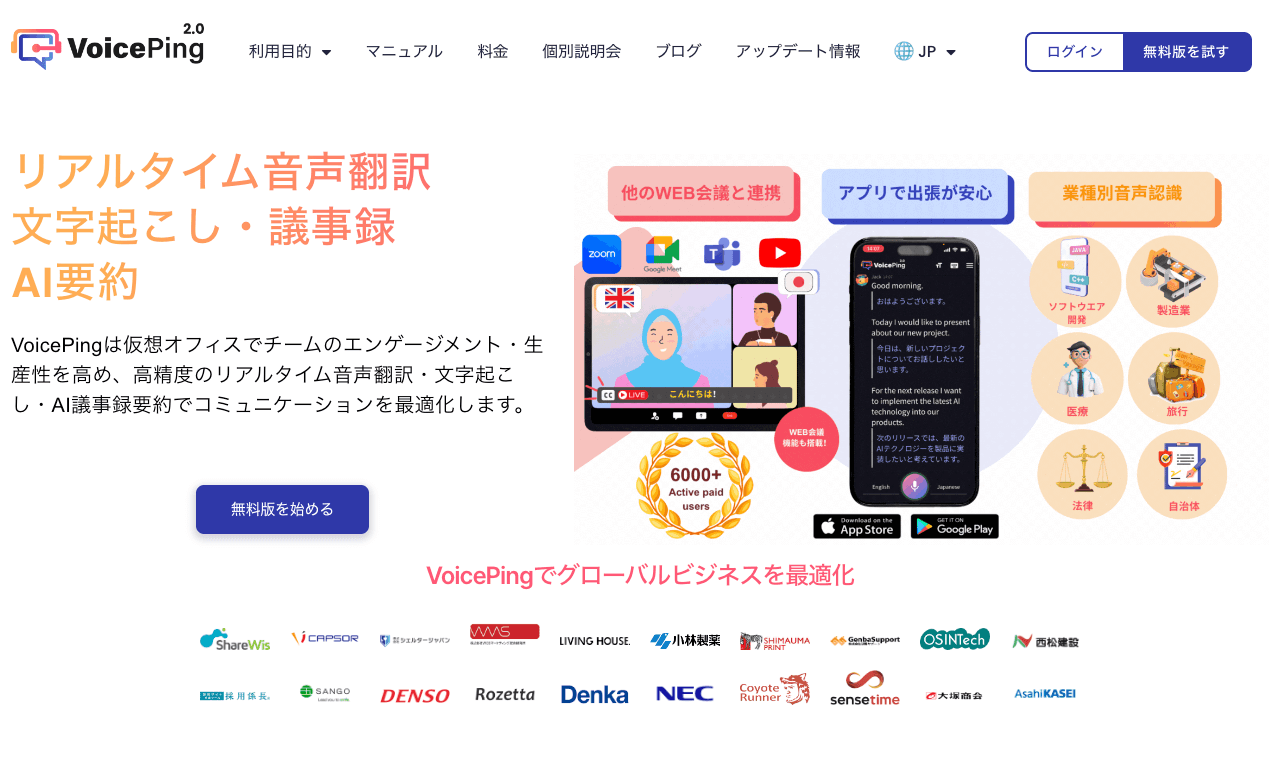
VoicePing can integrate with Slack and Chatwork, automatically notifying members of what everyone is currently doing.
This is possible because VoicePing has time-tracking functionality.
Time-tracking lets you know which projects are using whose time.
For example, if you start a “Create Proposal” project in VoicePing, the integrated Slack/Chatwork automatically gets notified that you started “Create Proposal.”
Using VoicePing enables productivity improvements that chat tools alone can’t achieve.
Also, with a forever-free plan, you can try it thoroughly before deciding to adopt it.
1. Try the free plan with volunteers
2. Use the 14-day paid plan trial
3. Implementation also costs ¥0
Zero cost until implementation.
If interested, please try the free plan.
Tandem
*Source: https://tandem.chat/*
| Tandem | Free | Small Teams | Medium Teams |
|---|---|---|---|
| Monthly/User | $0 | $8 (annual) | Contact us |
| Users | 50 | Unlimited | Unlimited |
| Initial Fee | $0 | $0 | $0 |
| Trial Period | Forever free | 30 days | Contact us |
| Screen Share | ○ | ○ | ○ |
| Chat | ○ | ○ | ○ |
| Guest Access | ○ | ○ | ○ |
| Feature | English only |
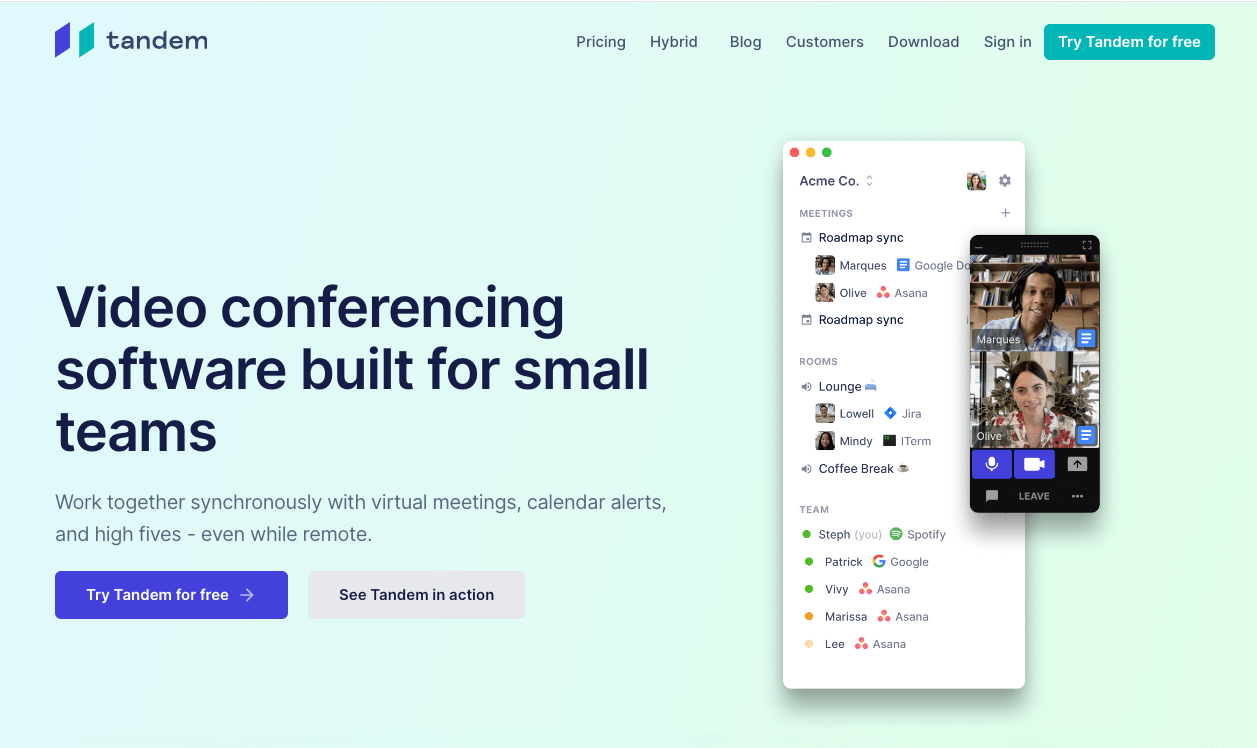
Tandem is an American virtual office tool used by major companies like Dropbox and Spotify.
Like VoicePing, it has a forever-free plan for unlimited trials, but note it’s English-only.
The UI is very simple—rather than having a 2D office, employees simply appear in a straightforward list.
You can instantly see who’s logged in, what they’re doing, and who’s in which meeting room.
It’s recommended for companies that only need minimal features.
With integration for over 100 apps, you can see at a glance which apps everyone is using.
oVice
*Source: https://ovice.in/*
| oVice | Free | Business | Education |
|---|---|---|---|
| Per Space/Month | ¥0/month | ¥82,500 (tax incl.)/month | ¥200+ (tax incl.)/person |
| Users | TBD | 50+ | 200 (40 recommended) |
| Initial Fee | ¥0 | ¥0 | ¥0 |
| Trial Period | 14 days | 14 days | 14 days |
| Min. Contract | – | 3 months | 3 months |
| Screen Share | ○ | ○ | ○ |
| Chat | ○ (Slack integration) | ○ | ○ |
| Guest Access | ○ | ○ | ○ |
| Feature | Rich background variety |
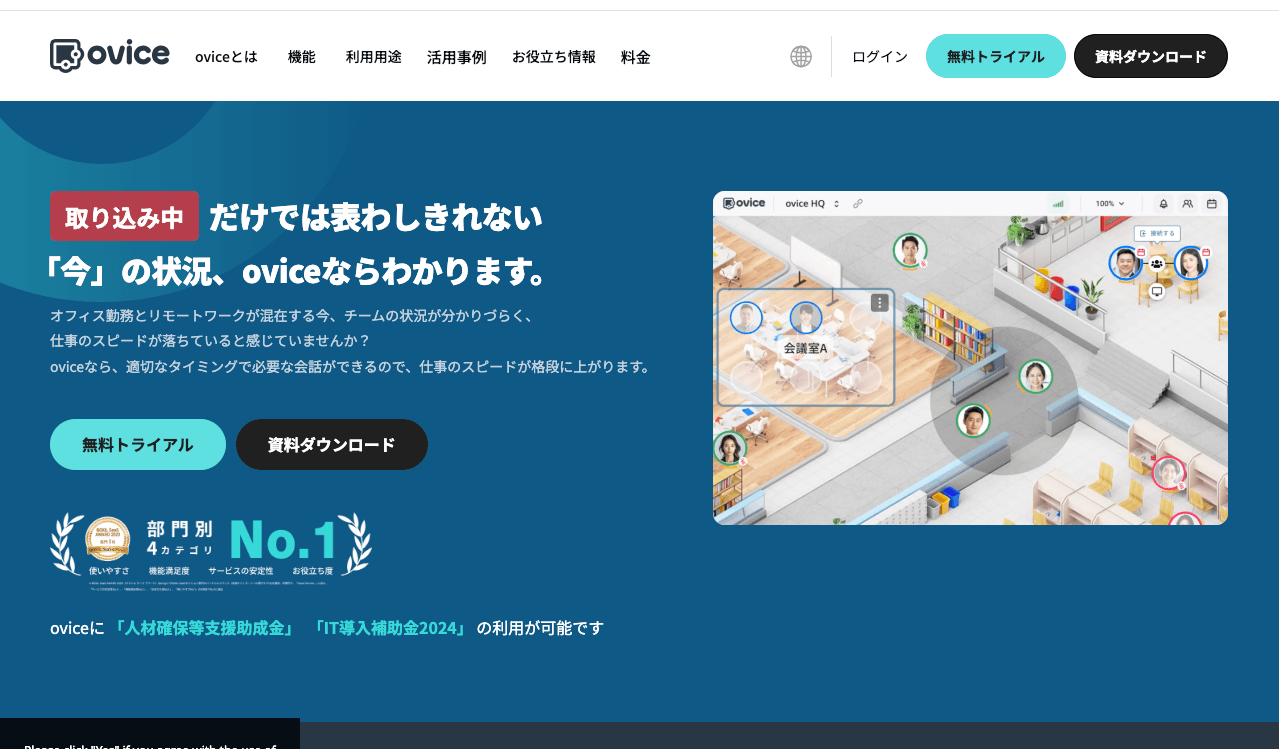
oVice is recommended for companies wanting a fun, engaging virtual office.
With over 200 background variations, you can customize your office to your liking.
Its appeal is usability for large enterprises, enabling creation of building-like offices online.
oVice is suitable for daily work as a virtual office but is also great for events.
Actual use cases include:
Events are possible because of the rich variety beyond just plain backgrounds.
Creating an enjoyable environment is oVice’s strength.
mycrew
*Source: https://mycrew.jp/*
| mycrew | Start Plan | Plus Plan |
|---|---|---|
| Monthly/User | Contact us | Contact us |
| Users | Contact us | Contact us |
| Initial Fee | Contact us | Contact us |
| Trial Period | Contact us | Contact us |
| Screen Share | Contact us | Contact us |
| Chat | Contact us | Contact us |
| Guest Access | Contact us | Contact us |
| Feature | Simple UI |
*”Contact us” indicates information not listed on website
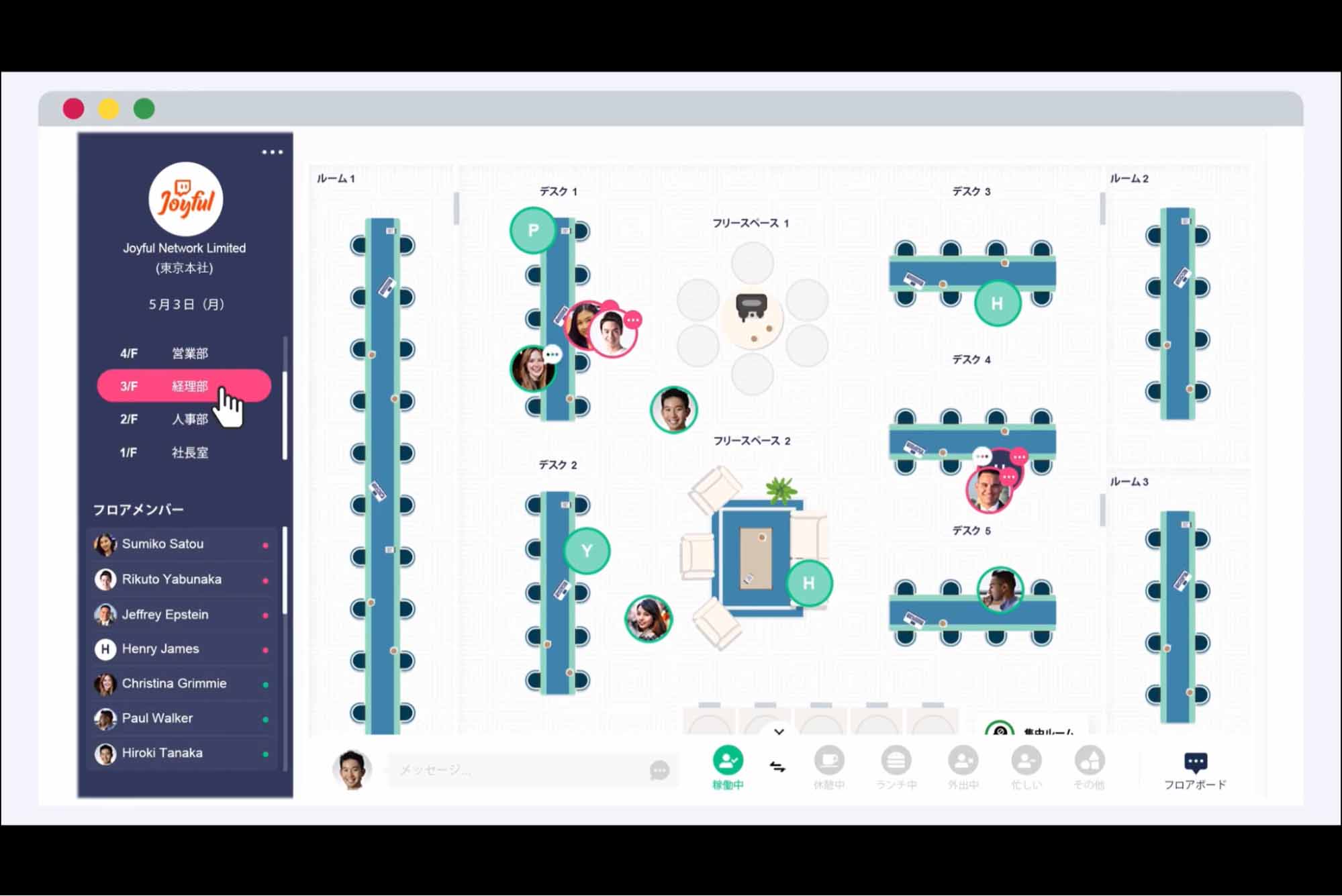
mycrew was released in March 2021 and features a “simple UI” as its virtual office tool characteristic.
With no user limit, contracts are per user rather than per space.
Pricing is the same as Chatwork’s Business plan at ¥550/month (tax included).
With a 2-week trial period, you can thoroughly evaluate before implementation.
Implementation also costs ¥0, so no worries there.
mycrew’s features include floor-wide announcements.
Not just to nearby people, but to the entire floor for “good morning” or “goodbye” greetings, enabling communication like in a real office even while remote working.
—
Combining Chat Tools and Virtual Offices Is Key to Productivity
Virtual offices are tools with many benefits that Slack can’t provide.
For the same number of people, virtual offices can reduce costs, and they help solve communication issues unique to remote work.
Continuing with Slack’s paid plan is one option, but combining Slack or Teams’ free plans with a virtual office can reduce costs while also improving productivity.
Some virtual office tools offer free trials or forever-free plans, so please consider trying them.
—
Tags: Slack Alternatives, Virtual Office, Team Communication, Cost Reduction, VoicePing